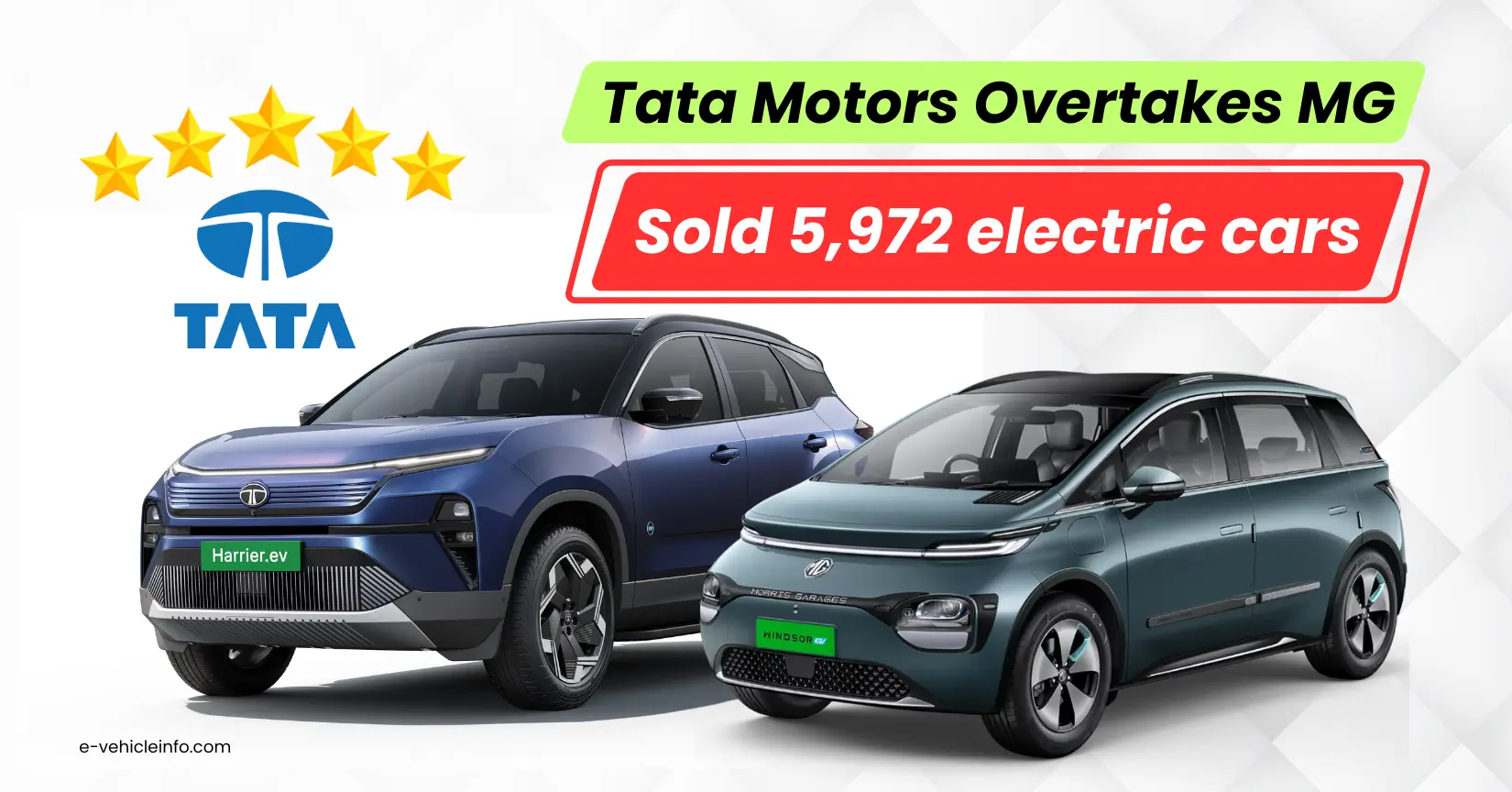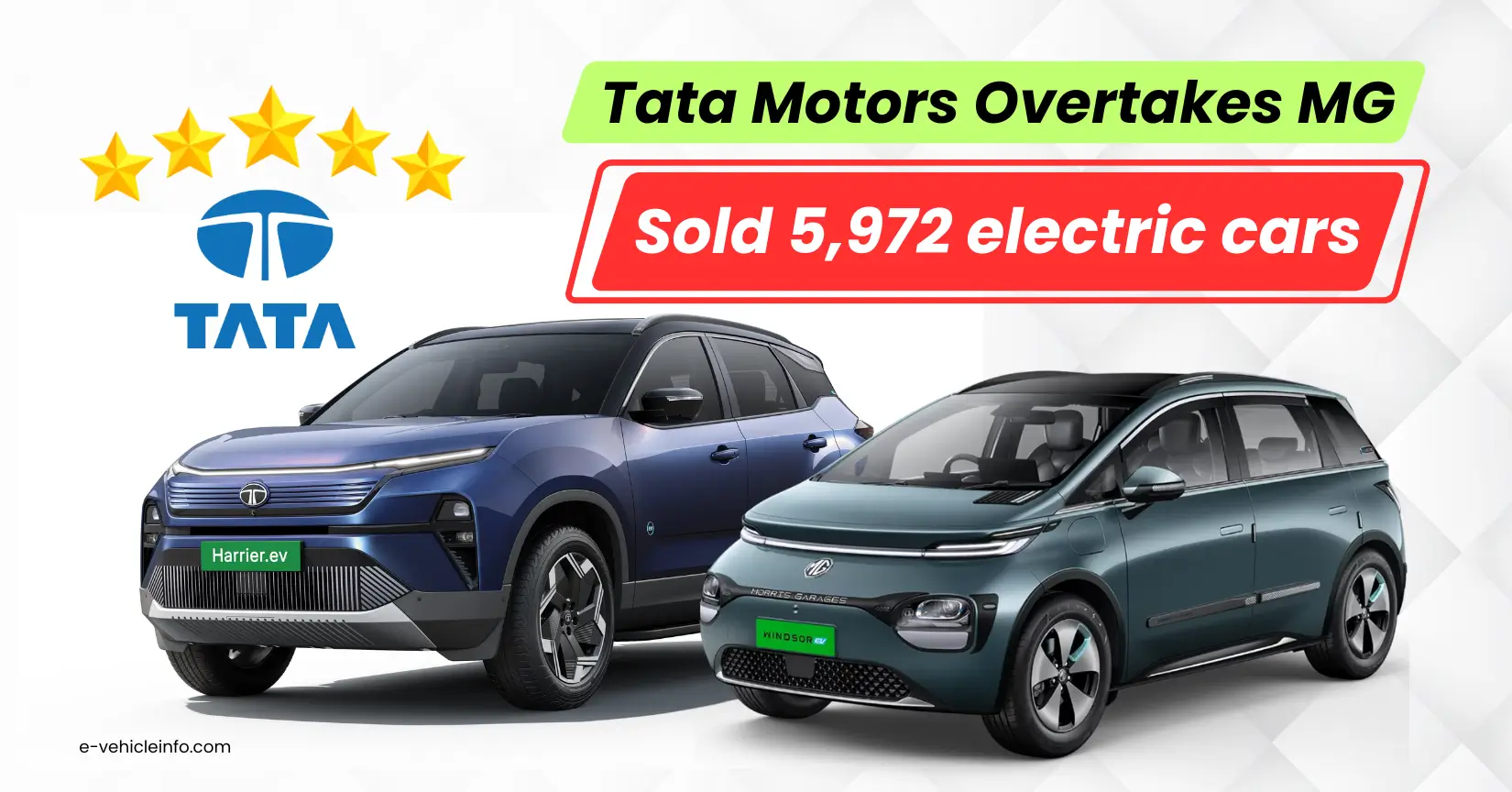
In July 2025, Tata Motors sold 7,124 electric cars in India, marking a strong comeback and surpassing MG Motor India’s 6,678 EV sales. This shift ends MG’s three-month streak of leading the electric passenger vehicle segment in the country.
Tata Was Behind MG for Three Consecutive Months
As per data from Vahan and industry sources:
-
April 2025: MG sold 6,011 EVs, while Tata managed 5,412 units
-
May 2025: MG stayed ahead with 6,202 units, and Tata followed with 5,832 units
-
June 2025: MG registered 6,684 EVs, and Tata was at 6,171 units. Source.
This trend marked a rare phase where Tata, the long-time EV leader in India, was consistently behind MG in monthly volumes. However, in July 2025, Tata reversed the trend and reclaimed its top spot.
Growth in EV Sales: Tata’s Strategy Paying Off
Tata’s jump to 7,124 units in July 2025, compared to 5,027 units in July 2024, represents a 41.7% year-on-year growth.
Here’s the model-wise contribution (estimated):
-
Tata Nexon EV: ~3,300 units
-
Tata Punch EV: ~2,000 units
-
Tigor EV and Tiago EV: ~1,300 units combined
-
Tata Harrier EV (new entrant): ~500–600 early deliveries
In contrast, MG’s sales were largely driven by:
-
MG Comet EV: ~4,000 units
-
MG ZS EV: ~2,600–2,700 units
The Comet continues to perform well in metro cities due to its compact size and urban appeal, but Tata’s wider portfolio, covering both entry-level and premium segments, played a crucial role this month.
India’s EV Market Hits New Highs in July 2025
The total electric passenger vehicle (PV) sales in July 2025 crossed 15,200 units, a new monthly record. EV penetration in the overall PV market stood at 4.6%, up from 2.9% in July 2024.
Here’s a breakdown of the top 5 EV sellers in July 2025:
| OEM |
EV Sales (July 2025) |
| Tata Motors |
7,124 |
| MG Motor India |
6,678 |
| Mahindra |
672 |
| BYD India |
325 |
| Hyundai India |
201 |
(Source: Autocar Professional, Vahan dashboard – updated till July 31, 2025)
Tata’s Portfolio Expansion: A Key Factor
Tata Motors currently offers the widest range of EVs in India under its GEN 2 and GEN 3 platforms, including:
-
Tiago EV (₹7.99–11.89 lakh)
-
Tigor EV (₹12.49–13.75 lakh)
-
Punch EV (₹10.99–14.49 lakh)
-
Nexon EV (₹14.49–19.29 lakh)
-
Harrier EV (launched in limited batches, deliveries started in June 2025)
With EVs across multiple price points, Tata was able to cater to both personal buyers and fleet operators.
In addition, the company has installed over 5,000 public charging points across India under its collaboration with Tata Power, strengthening customer confidence in long-distance travel.
My Perspective
Based on my long-term coverage of India’s EV journey, this shift in leadership is more than just monthly numbers. Tata’s win in July came from model diversity, supply chain readiness, and timely new launches. Unlike MG, which currently relies heavily on the Comet and ZS, Tata has multiple volume drivers.
However, it’s worth noting that MG’s consistent 6,000+ monthly EV sales across four months show that the Indian EV market now has more than one serious player. Mahindra, with over 670 units (mainly XUV400), is also improving steadily.
Final Thoughts
Tata Motors has shown that a strong EV product lineup, consistent supply, and early mover advantage can still deliver results even in a competitive market.
With the Tata Harrier EV entering the premium space and newer variants of Nexon and Punch expected in Q4, Tata is preparing to defend its position in the upcoming festive season. Read more Tata Harrier EV vs Tata Harrier Diesel: Which One Should You Buy?
For now, July belongs to Tata Motors—but the race is far from over.
The post Tata Motors Overtakes MG in EV Sales After Months – July 2025 India Report appeared first on .