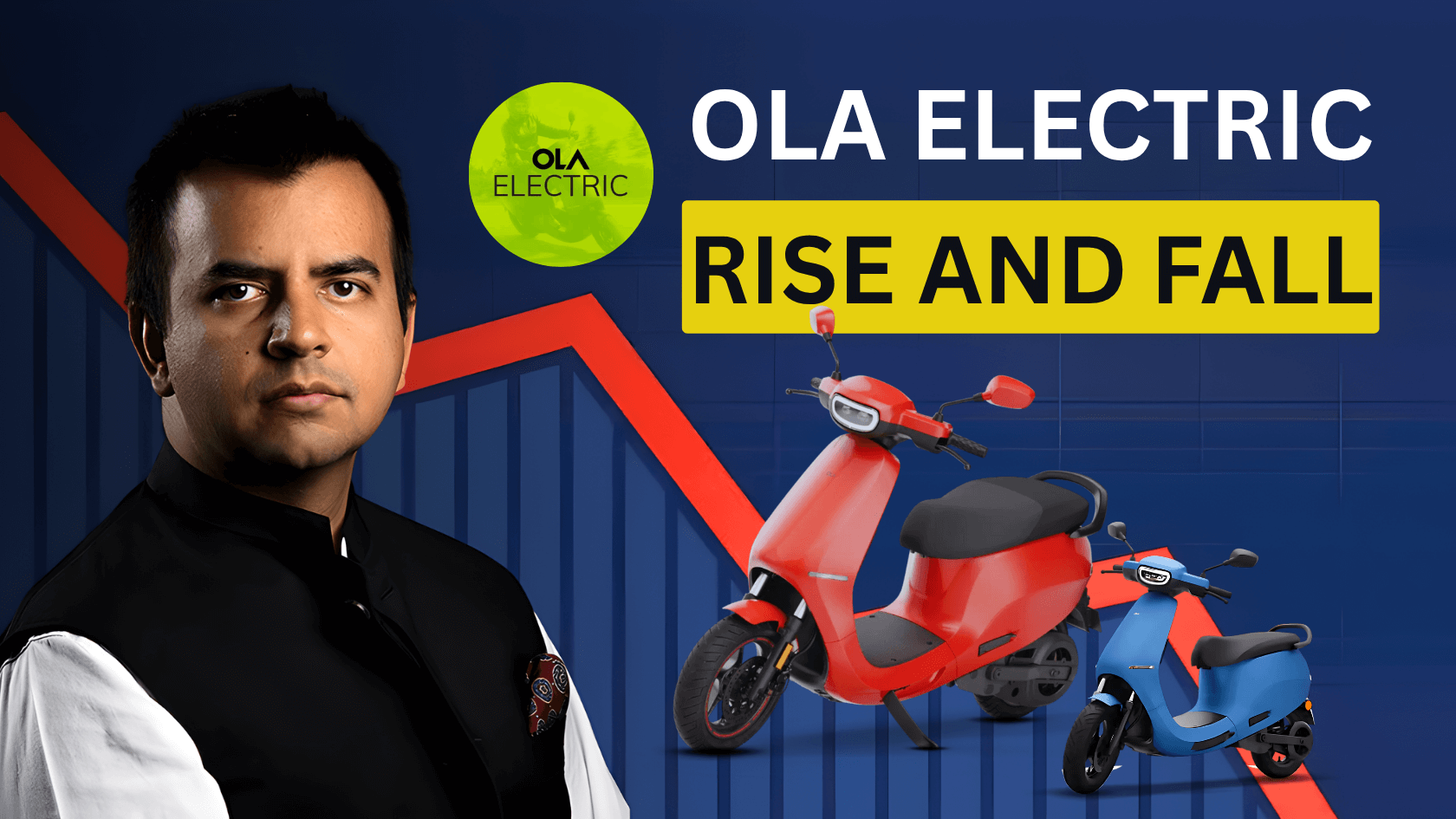
There was a time when Ola Electric looked unstoppable. It was hailed as the “Tesla of India” — a bold, homegrown company promising to redefine electric mobility.
From futuristic scooters and mega-factories to an entirely digital buying experience, Ola seemed ready to lead India’s EV revolution.
Fast forward to today, and the story looks very different. From regulatory action in Goa to collapsing sales and mounting service complaints, Ola Electric is now battling a serious identity crisis.
So how did India’s biggest EV dream derail so quickly?
Let’s break down what went wrong and what lessons this holds for India’s growing EV sector.
The Rise: When Ola Looked Unstoppable
A Strong Product-Market Fit
Back in 2019, the Indian electric scooter market was nascent. Established players like Ather Energy were selling premium scooters (~₹1.6–1.7 lakh), and many cheaper models were of poor quality.
Ola Electric saw an opening: deliver a sleek, feature-rich, affordable scooter made in India. After acquiring the Dutch startup Etergo in 2020, Ola developed the S1 & S1 Pro, which promised:
~121 km claimed range (though real-world lower)
~115 km/h top speed
Touchscreen dashboard, Move OS, voice command
Design that felt “European-like”
This product promise resonated: big pre-bookings, social media buzz, and a new EV-aspirant buyer base.
The “Giga Factory” Dream
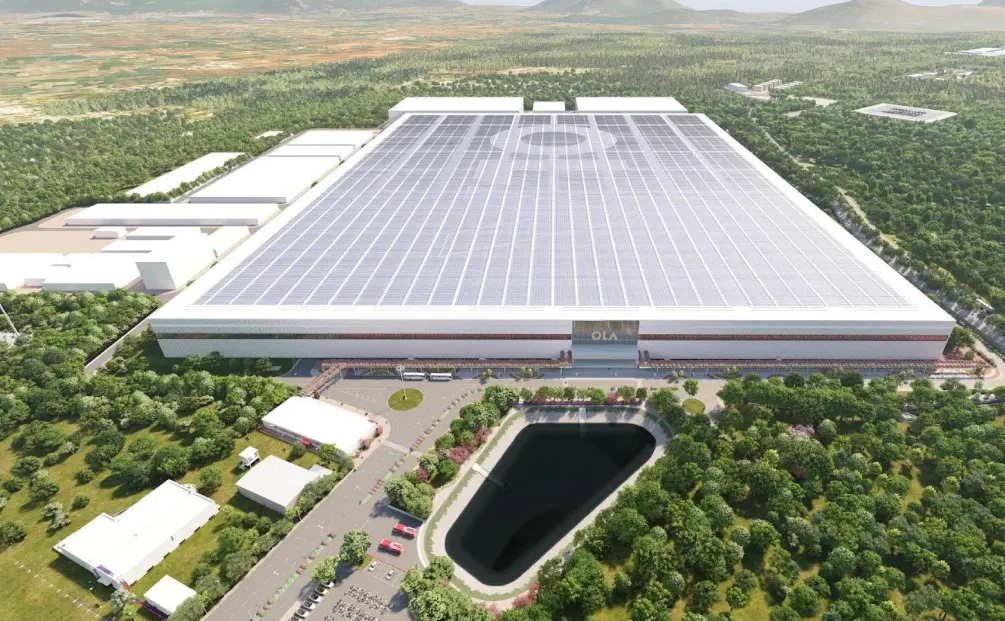
In Pic: Ola GIGA Factory – India’s Largest Electric Two-Wheeler factory
Soon after came something even more ambitious: a 500-acre “FutureFactory” in Tamil Nadu, billed as possibly the world’s largest 2-wheeler EV plant. The aspiration: produce 1 crore scooters a year.
Even more radical: ditching traditional dealerships.
Everything from purchase to delivery would happen online — “no middle-man” model. It sounded fresh, efficient, futuristic. Belief drove momentum.
The Fall: Where Things Started to Crack
1. Rushed Product & Execution Failures
While traditional automakers take 3-4 years for testing and validation, Ola launched its first mass scooters approximately 18 months after acquiring Etergo. That speed came at a cost.
Signs of breakdown emerged:
Displays freezing mid-ride; scooters not unlocking; range claims far off reality.
By early 2022, viral videos of Ola scooters catching fire emerged. One fire in Pune triggered widespread panic.
The company officially recalled 400+ units, citing a supplier issue.
Owners reported ongoing issues: frequent breakdowns, service delays, and signalling that the product was being sold while still under development.
2. After-Sales & Service Support Collapse
When problems piled up, the service network failed to keep pace. Time-lines stretched: weeks turned into months, vehicles awaited parts, and service centres were overwhelmed.
For a company selling a “mobility” product, this was a critical failure.
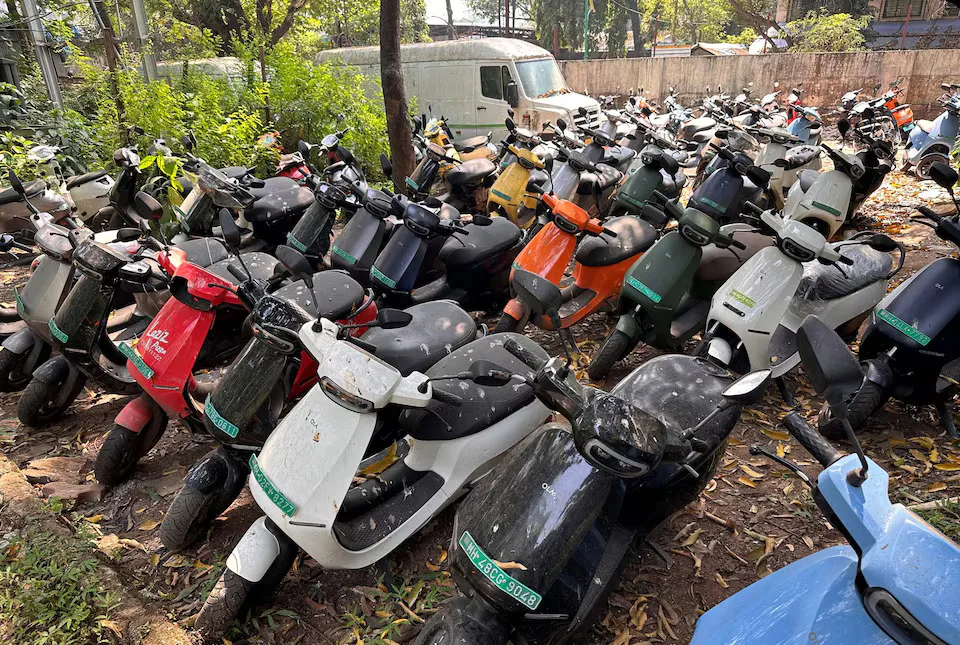
In the state of Goa, for instance, the Transport Department received complaints of over 2,000 vehicles left unattended at Ola’s workshops.
The department suspended new registrations of Ola vehicles in the state and issued show-cause notices over the company’s trade certificate.
3. Charging Infrastructure Gap
A core component of EV adoption is the supporting ecosystem: fast-charging network, reliable service, and spare parts network.
While Ather, TVS, and Bajaj began investing in charger networks (e.g., Ather Grid in multiple cities), Ola seemed focused more on product and less on infrastructure.
Reports indicate that high-speed chargers at some Ola showrooms have since been downgraded or removed.
Meanwhile, the company did not sufficiently open up its charging standard to third parties, limiting flexibility for owners.
4. Management & Transparency Issues
Internal turmoil began to surface: senior engineering, manufacturing, design and HR heads departed.
Job cuts escalated; by early 2025, over 1,000 roles were reportedly cut. Pressure to scale fast meant internal processes were stressed.
Financially, in FY 2024, Ola’s unit sales were 3,29,618 and revenue ~₹5,009 crore (~₹50,098.31 million), but the company still logged a loss-before-tax of ~₹1,584.4 crore (~₹15,844 million). Ola Electric
In addition, media reports noted that the company’s “record monthly sales” included pre-bookings and not just actual deliveries — prompting scrutiny from regulators.
What About Market Share & Current Numbers?
In FY 2022, Ola’s market share in E2W (electric two-wheeler) was about 21 %. By FY 2024, it rose to ~35 % per Ola’s own disclosures. Ola Electric
However, by 2025, the market share slide is steep: For September 2025, Ola had about a 13 % share (delivering 13,371 units) and reportedly fell to ~19.6 % share in Q1 FY26 with ~68,192 units sold.
Sales figures dropped significantly: registrations from Jan–Oct 2025 for Ola were about half of what the year-earlier period clocked
On the regulatory side, Goa has suspended VAHAN registration for Ola scooters, effectively blocking new sales in the state until compliance issues are resolved. Source HT
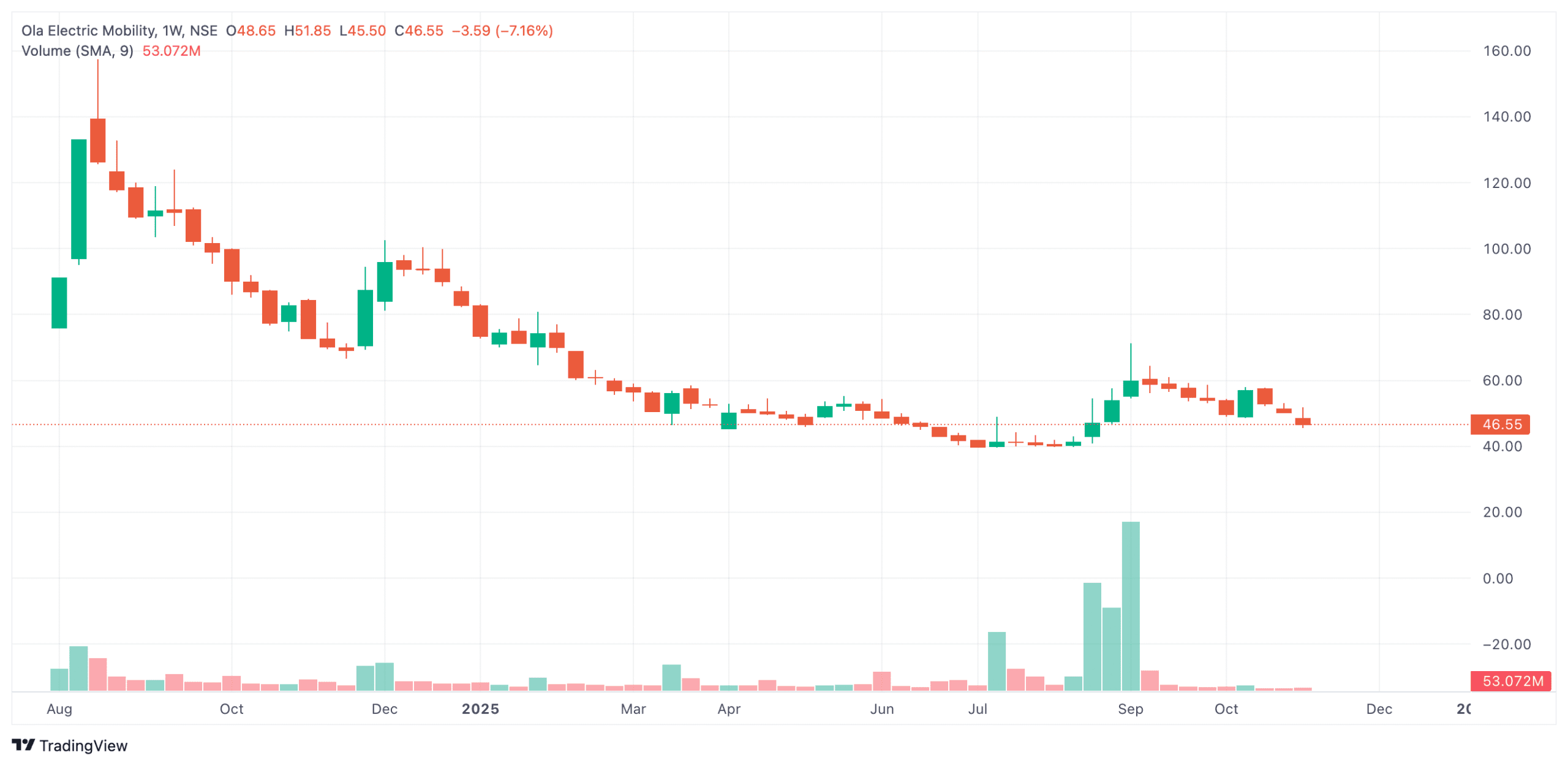
Over the past year, Ola Electric Mobility Ltd’s share price has dropped sharply to ₹46.6, down more than 50% from its 52-week high of ₹102. The fall reflects growing investor concern amid declining market share, service complaints, and management challenges, signalling that the company is losing both investor confidence and customer trust.
In Pic: As of today, I’ve added the latest Ola Electric Mobility Ltd chart from TradingView (NSE: OLAELEC). The stock closed at ₹46.55 on 7 Nov 2025, down over 7% for the week and more than 50% from its 52-week high.
In just one year, Ola Electric has seen a sharp decline in both investor confidence and customer trust, reflecting its ongoing operational and market challenges.
Source:
Hindustan Times, Economic Times (Auto & Markets), Moneycontrol, Reuters, Bloomberg and OlaElectric.com (official site & financial reports).
The Present: A Brand in Transition
Ola Electric is now attempting to stabilise. Recent steps:
Updates to Move OS firmware and software patches aimed at improving stability.
Expanded service centre network in several cities.
A move to open up its service & spare parts ecosystem to third-party/local garages — a shift toward platform-openness.
But the road ahead is tough. Rebuilding customer trust, once lost, takes time. Many buyers remain cautious, competitors are moving ahead with better service, and infrastructure gaps persist.
The Bigger Picture: Lessons for India’s EV Revolution
Ola’s story isn’t just about one company. It offers three broader takeaways for the EV sector:
Speed without quality is dangerous. Hardware, especially vehicles, can’t behave like software launches — lives and reputation depend on reliability.
Ecosystem matters as much as product. Market-leading features mean little without dependable service, spare parts, and charging infrastructure.
Trust once broken is hard to regain. In a nascent market like India’s EV two-wheeler space, brand reputation is a major differentiator.
Despite its flaws, Ola Electric did something valuable: it made EVs aspirational and visible to the mass buyer.
Before Ola’s rise, EV scooters were mostly niche, expensive, or under-equipped.
Ola pushed the envelope. It forced Ather, TVS, Bajaj and others to accelerate.
However, the challenge is now clear: execution matters more than ambition.
Our Final Thoughts
Ola’s fall isn’t final — but it is a warning. Belief built its rise. Reality triggered its fall.
What comes next depends on whether Ola can follow through on its promise with consistency, service, and infrastructure.