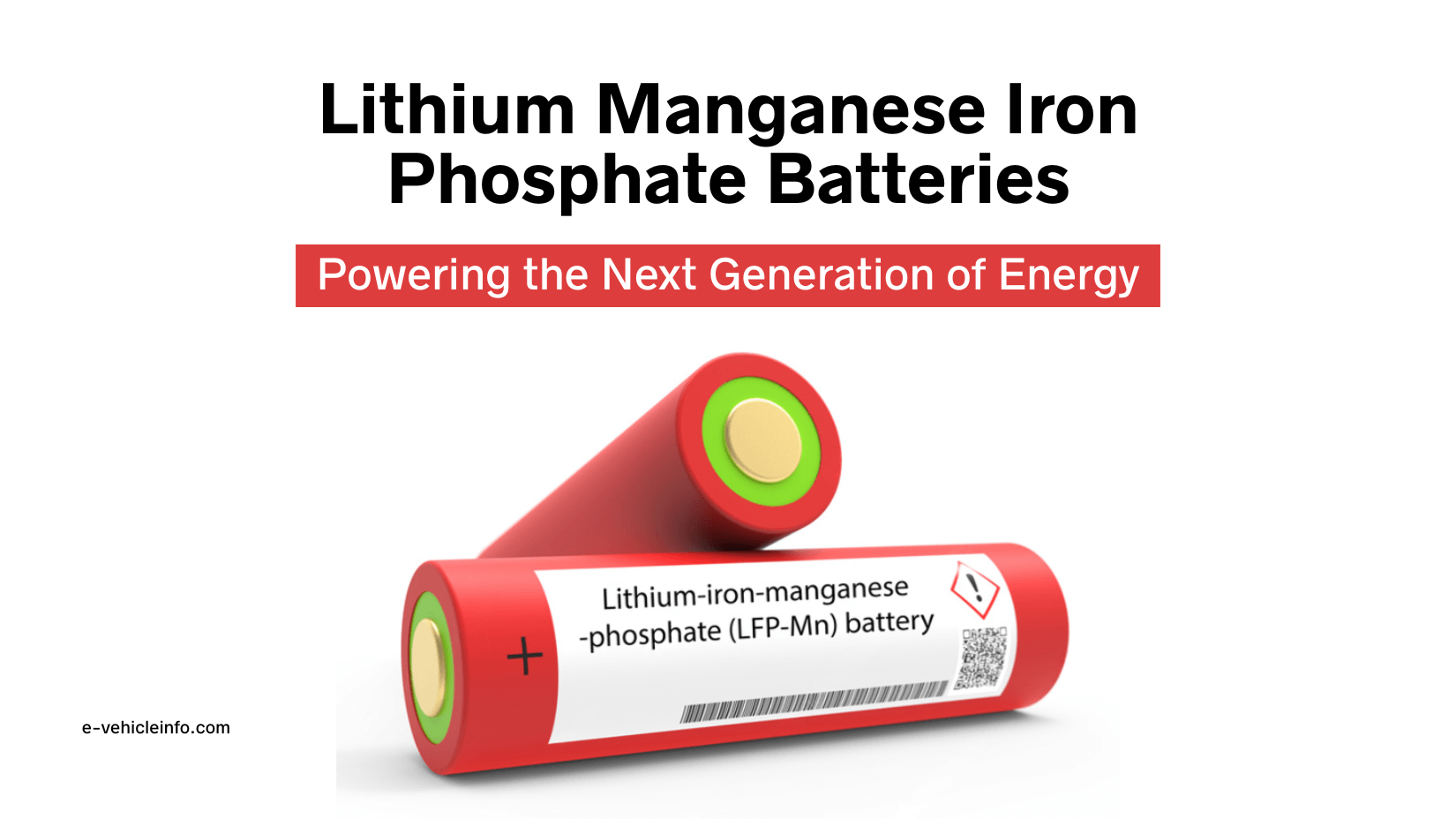
The global shift toward electrification is reshaping industries, with batteries at the core of this transformation.
Among emerging technologies, lithium manganese iron phosphate (LMFP) batteries are gaining traction as a next-generation solution.
Market Outlook
The LMFP market is projected to grow from USD 1.85 billion in 2025 to USD 6.79 billion by 2034, advancing at a strong CAGR of 15.55 percent.
This growth is driven by rising demand from the automotive sector, increased investments in battery manufacturing, and government-backed energy infrastructure initiatives worldwide.
Technology Advancements
LMFP batteries mark a major step forward in battery chemistry.
By adding manganese to traditional lithium iron phosphate (LFP), they achieve higher energy density and longer performance life.
-
Form factors: Available in prismatic, cylindrical, and pouch formats, LMFP batteries cater to diverse applications such as passenger and commercial EVs, energy storage systems, consumer electronics, and industrial uses.
-
Safety and cost-effectiveness: Their balance of performance, safety, and affordability is accelerating adoption across industries.
Regional Insights
-
Asia-Pacific (2025 leader): The region dominates due to EV adoption and strong battery manufacturing ecosystems. China plays a decisive role, supported by abundant raw materials, rapid lithium mining expansion, and leading players like BYD, CALB, and CATL. BYD’s second-generation LMFP blade battery, launched in 2024, highlights these advances.
-
Europe (fastest growth ahead): Countries like Germany, France, and Italy are expanding commercial EV production and domestic battery manufacturing, supported by government initiatives. Verkor’s new plant in Dunkirk underlines Europe’s ambition to compete globally.
Key Sectors Driving Demand
-
Automotive: EVs remain the largest adoption segment, with LMFP batteries enabling longer range and better safety.
-
Energy Storage: Utilities and grid operators are turning to LMFP for backup power and load balancing, ensuring stable renewable energy supply.
This dual role in mobility and infrastructure positions LMFP as a cornerstone of the clean energy transition.
Technology & Innovation Trends
-
Cathode development: Traditional synthesis methods remain dominant for cost efficiency, but nano-engineered cathodes and advanced coatings are gaining traction for higher energy density and longer cycle life.
-
Partnerships: Collaborations between automakers and battery producers are accelerating tailored solutions for EVs and heavy-duty applications like buses and trucks.
-
Form factor evolution:
-
Prismatic cells are widely used in EVs and grid storage due to their durability, space efficiency, and long cycle life.
-
Pouch cells are gaining momentum in consumer electronics and mobility solutions for their lightweight and flexible design.
Policy & Government Support
Government investment plays a crucial role in scaling LMFP adoption:
Such policies reduce import reliance and ensure global competitiveness.
Distribution Landscape
-
OEMs: Automakers dominate demand, preferring direct partnerships to ensure quality and support.
-
Aftermarket: Growing importance for replacement and affordable solutions.
-
E-commerce: Platforms like Amazon and Walmart are emerging as distributors, diversifying sales channels.
Challenges & Opportunities
Scaling production while maintaining cost-performance balance remains a key challenge.
However, rapid innovation and heavy investment suggest LMFP batteries will transition from niche to mainstream much faster than earlier technologies.
Conclusion
LMFP batteries embody the convergence of science, industry, and policy. With their unique mix of safety, affordability, and performance, they are shaping the future of mobility and energy storage.
As electrification accelerates, LMFP stands out as a defining technology—powering not just vehicles and grids, but the future itself.
About the Writer
Ajit Bansod is a skilled, research-driven analyst at Towards Automotive, with over 3 years of experience specializing in the intersection of automotive innovation and intelligent communication technologies.
Source: Towards Automotive